How Do Solar Garden Lights Work? From Sunlight to LED
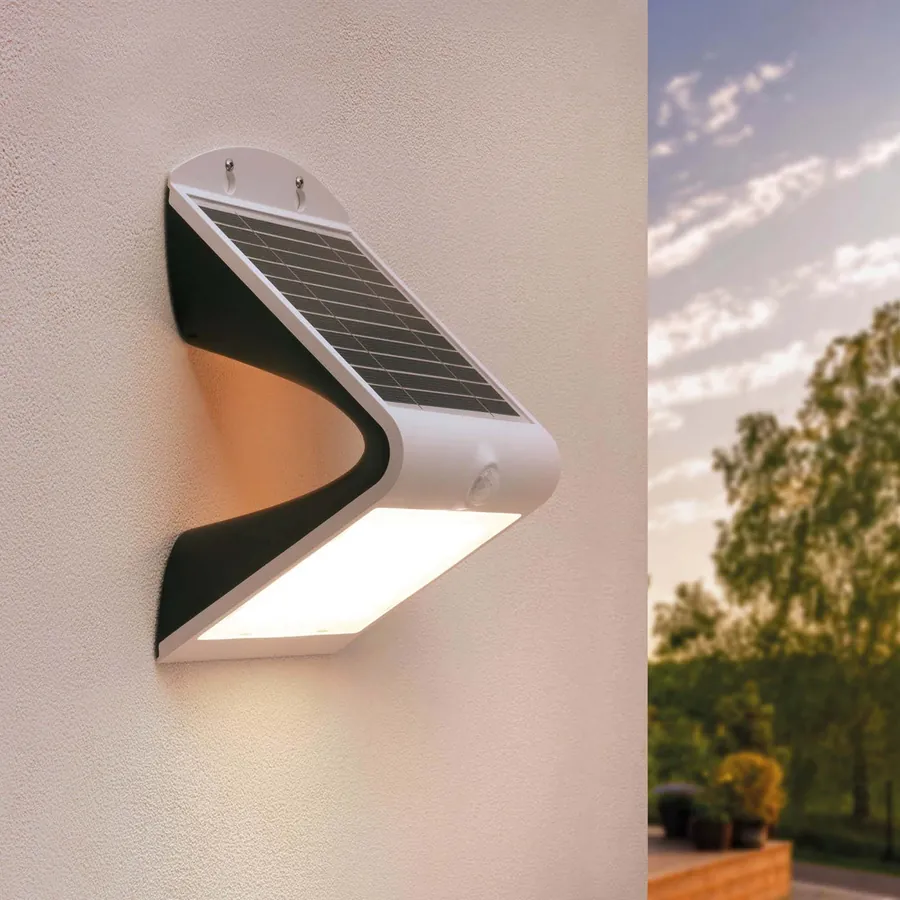
A solar garden light is a small standalone energy system. During the day, a photovoltaic panel converts light into electrical energy and charges a rechargeable battery. After dark, a controller uses the stored energy to power an LED. The fixture needs no mains cable because generation, storage, control and lighting are combined in one product.
Step 1: the solar panel collects energy
The dark panel on the top of a path light or on a separate stake contains photovoltaic cells. When light reaches the semiconductor material, it creates an electrical current. Panel size, cell type, orientation, shade and surface cleanliness affect how much energy the light can collect during the day. Brightness at night begins with exposure during the day.
Step 2: the charging circuit manages the battery
The panel’s output passes through a simple control circuit into a rechargeable battery. The battery may be a Ni-MH cell in a decorative stake light or a lithium-based cell in a higher-output wall light or spotlight. Voltage and chemistry must match the circuit. The battery stores energy so the LED can operate when the panel is no longer producing useful power.
Step 3: the panel also helps detect darkness
Many garden lights use the panel voltage as a day-night signal. In daylight, the circuit stays in charging mode and keeps the LED off. When panel output falls below a threshold, the controller switches to discharge mode and turns the light on. Covering the panel during a daytime test can simulate darkness, although a short delay may be normal.
Step 4: the controller sets the lighting mode
A basic decorative light provides steady output until the battery reaches a cutoff. More advanced products may dim over time, cycle through decorative effects or wait for a PIR motion sensor. Mode logic lets designers trade peak brightness against operating time. A motion wall light can deliver a stronger short burst because it is not drawing that output all night.
Step 5: the LED converts stored energy into light
LEDs are efficient and compact, making them suitable for small solar systems. Lumen output describes the amount of light, while color temperature describes whether it appears warm or cool. Lens shape and reflector design determine where the light goes. A modest LED with a well-designed optic may create a more useful path pattern than a brighter LED aimed poorly.
What happens on a cloudy day?
The panel can still produce energy under diffuse daylight, but usually less than under direct sun. The battery begins the night at a lower state of charge, so runtime or brightness may decrease. Shade, dirt and short winter days have a similar effect. A product cannot spend more energy overnight than it collected and stored.
Why solar lights sometimes stay on in daytime
If a light remains on, the panel may be covered, disconnected or unable to send a daylight signal. A newly inserted battery of the wrong type can also create confusing behavior. Check the switch, panel connection and exposure before replacing parts. Our solar-light troubleshooting guide covers the common failure paths.
What every product specification should show
- Panel type and rated electrical output
- Battery chemistry, voltage, capacity and whether it is replaceable
- LED lumens, color temperature and lighting modes
- Charging and runtime conditions
- IP rating, materials and installation method
- Sensor type and motion behavior where applicable
Bottom line
Solar garden lights work by balancing collection, storage and consumption. Panel, battery and LED are not separate marketing features; they are one energy chain. Understanding that chain helps consumers choose a useful light and helps wholesale buyers compare suppliers on a common specification. Explore our solar garden light categories for model-level examples.
Related solar lighting guides
Ready to source solar garden lights?
Send us your target assortment, quantities or OEM brief—our export team will reply with relevant models, specifications and quotation details.
Request a Wholesale Quote Browse Products