Warm White vs Cool White Outdoor Solar Lighting
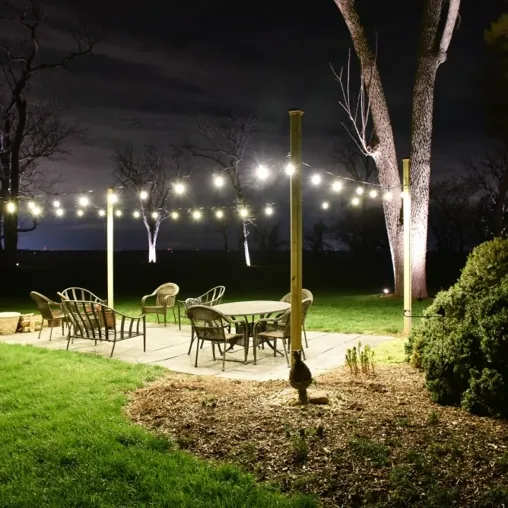
Warm white and cool white describe the appearance of light, not its brightness. Color temperature is measured in kelvin: lower numbers look warmer and more amber, while higher numbers look cooler and bluer. For garden lighting, the right choice depends on materials, planting, viewing distance and the mood the space should create.
What warm white looks like outdoors
Warm white around 2700K to 3000K is widely used for residential gardens, patios, hospitality and decorative string lighting. It supports timber, brick, bronze finishes and warm-colored planting. The softer appearance also helps low-level path lighting feel integrated rather than clinical.
What neutral and cool white look like
Neutral white around 3500K to 4000K can make pale stone, contemporary walls and green foliage appear crisp. Higher cool-white values create a more blue appearance and stronger visual contrast. They may suit functional or modern applications, but can look harsh when mixed with warm indoor light seen through windows.
Color temperature does not equal lumens
A 3000K and 6000K light can have the same measured lumen output. People may perceive the cooler source as sharper, but that does not mean it produces more total light. Compare lumens, beam and color temperature as separate specification lines.
Choose for the surface being lit
Warm light enriches red brick, timber and golden finishes. Neutral light can show gray stone and modern render more accurately. Dense green foliage can work with either, depending on whether the aim is a relaxed scene or crisp architectural definition. Test real materials at night because product photographs and screens alter color.
Keep one visual language
Mixing a warm path light, cool spotlight and blue-white wall light in a small garden makes each product look unrelated. Choose one main color temperature across the route and feature lighting. A deliberate contrast can mark a special architectural element, but accidental variation usually reduces the perceived quality of the installation.
Consider neighboring light
Look at interior windows, street lighting, signage and existing landscape fixtures. Outdoor solar lights do not appear in isolation. A warm hospitality patio may clash with a cool-white string, while a modern entry already illuminated in neutral white may support a matching wall light.
Use warmer light for visual comfort, not as a rule
Low-level garden fixtures sit close to people and reflective leaves, so a warmer appearance often feels more comfortable in seating and residential areas. Functional entries and signs may benefit from a more neutral appearance. The decision should come from the task and surroundings rather than a blanket claim that one temperature is always superior.
Test finishes and samples together
Black, bronze, stainless and natural-material fixtures respond differently under the LED they contain. View the daytime finish and night output as one product. For a coordinated range, place pathway, wall, spotlight and string-light samples side by side after dark; kelvin labels alone do not reveal tint differences between LED batches.
Color-changing products need a default plan
RGB and multi-color decorative lights serve events and seasonal displays, but buyers still need to know the power-on default, memory behavior and available steady-white mode. If several products are used together, inconsistent programs quickly become visible. Packaging should explain how to select and retain the intended effect.
Retail and e-commerce presentation
State the kelvin value rather than relying only on “warm” or “white.” Use consistent photography settings and avoid editing that changes the glow. If a product is available in several temperatures, keep model codes and packaging clearly separated to prevent mixed cartons and customer complaints.
Wholesale approval checklist
- Target kelvin value and acceptable production tolerance
- Lumens and beam measured separately from color
- Night sample viewed on the intended material
- Consistent LED bin across the approved batch
- Correct model, carton and label identification
- Matching color temperature across related pathway, wall and spotlight items
Bottom line
Warm white is the versatile choice for relaxed gardens and hospitality; neutral or cool white can support modern and functional scenes. The best result comes from matching surfaces and keeping the range consistent. Compare color-temperature options across our outdoor solar light categories or request a tuned OEM specification through SunVolt Garden OEM/ODM.
Related solar lighting guides
Ready to source solar garden lights?
Send us your target assortment, quantities or OEM brief—our export team will reply with relevant models, specifications and quotation details.
Request a Wholesale Quote Browse Products