Do Solar Garden Lights Work in Winter? A Practical Guide
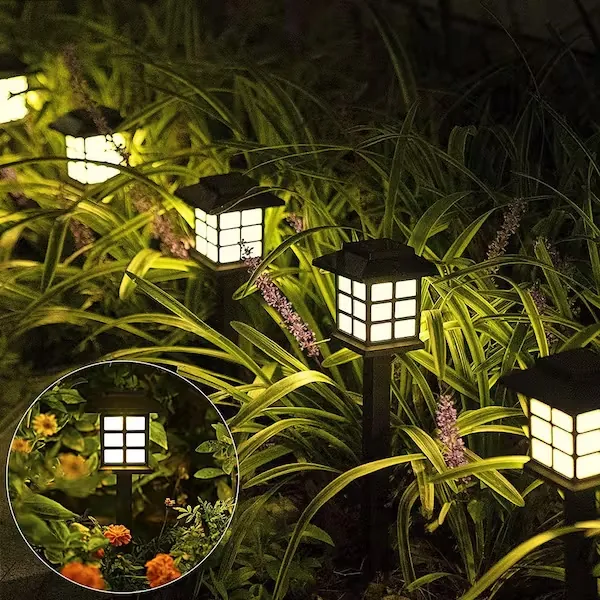
Yes, solar garden lights can work in winter, but they usually have less energy available than in summer. The reason is simple: winter combines shorter charging days with longer operating nights. Cloud, tree shade, snow, dirt and an aging battery can reduce the energy budget further. A good winter result comes from matching expectations and product design to the site.
Why winter changes solar-light performance
A garden light must collect enough energy during daylight to run the LED after sunset. In winter the sun is lower, shadows stretch farther and a panel may receive fewer hours of useful light. The light also switches on earlier because darkness arrives sooner. Even if every component is healthy, the same product may run for fewer hours or at a lower brightness than it does in June.
Cold is only part of the story
People often blame temperature alone, but poor solar exposure is usually just as important. A location that receives direct sun in summer may sit behind a fence, roof or evergreen canopy in winter. Dirt and leaf film are more significant on a small garden-light panel than on a large array because there is little spare collection area. Start with the site before assuming the electronics have failed.
Choose a product with a realistic energy balance
For all-night decorative use, moderate lumens are easier to sustain than a very bright output. Motion-sensor wall lights can reserve energy by staying dim or off until needed. A separately adjustable panel helps when the fixture must sit in shade but a nearby position receives sun. Larger panels and suitable battery capacity provide more margin, but only when the specifications are genuine and the control logic uses that energy sensibly.
Placement tips for winter charging
- Observe the proposed location around midday in the winter season, not only in summer.
- Aim the panel toward the clearest part of the sky and keep it away from eaves and dense branches.
- Remove leaves, dust and snow without scratching the panel surface.
- Do not place a decorative object where its own shade crosses the panel.
- For string lights or spotlights with a separate panel, use the cable length to put the panel in sun.
What to expect after several cloudy days
Solar lighting is not connected to an unlimited power source. After consecutive low-light days, shorter runtime is normal. Products with dimming or motion logic may preserve useful operation better than products that attempt maximum output from dusk. If guaranteed light is required for safety, code compliance or continuous commercial operations, solar garden lights should not be treated as the sole critical-lighting system.
How to prepare existing lights
Clean the panel, confirm the switch is on, inspect for water and charge the light in the best available sun. If performance has declined across all seasons, test or replace the rechargeable battery with the specified type. Loose contacts and corrosion can also mimic a weak battery. Our battery replacement guide explains the safe comparison points.
Winter questions for wholesale buyers
Importers and retailers selling into northern or cloudy markets should request the panel, battery, lumen and mode details together. Ask how runtime is defined, whether the battery is replaceable and whether the pack explains seasonal variation. A winter claim should be supported by a complete energy specification, not a photograph of snow.
Bottom line
Solar lights work in winter when they receive useful daylight and the product is designed around a realistic output. Expect seasonal variation, prioritize panel exposure and choose modes that fit the job. For a range suited to pathway and garden applications, compare our solar pathway lights and their panel, battery and runtime specifications.
Related solar lighting guides
Ready to source solar garden lights?
Send us your target assortment, quantities or OEM brief—our export team will reply with relevant models, specifications and quotation details.
Request a Wholesale Quote Browse Products