Solar Spotlights for Trees: Placement, Beam and Brightness
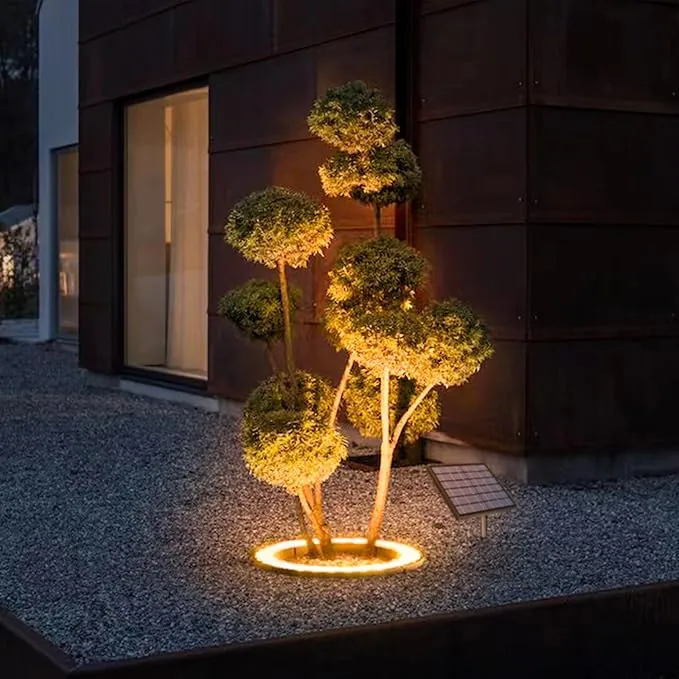
A solar spotlight can turn a tree into the visual anchor of a night garden, but placement matters as much as brightness. Choose the view you want, identify the part of the tree that should be revealed and make sure the panel receives sun. Only then can beam, lumen output and mounting distance be compared meaningfully.
Decide whether to light the trunk, canopy or silhouette
A narrow beam close to the trunk emphasizes bark and vertical form. A wider beam set back from the tree reveals more canopy. Lighting from behind creates a silhouette from one viewing direction, while front or side lighting shows texture. Draw the main viewing position on a simple plan before placing fixtures.
Start with one light, then add depth
One spotlight can create a strong accent on a small ornamental tree. Two lights from different angles reduce hard shadow and make a mature specimen readable from more than one path. Avoid surrounding every tree with equal brightness; contrast between lit and unlit areas gives the landscape depth.
Match the beam to the target
A tight beam is useful for a slim trunk, columnar tree or sign. A broader beam suits a low spreading canopy or dense shrub. Ring-shaped and decorative uplights create a visible fixture effect as well as illumination. Compare actual night photographs and viewing distance rather than relying on lumens alone.
Control glare
Aim the fixture so guests do not look directly into the LED from a path, window or seating area. Small changes in angle can preserve the tree effect while hiding the source. Ground-level fixtures should also sit where maintenance equipment, children and pets are unlikely to strike them.
Give the panel its own good location
The best lamp position under a canopy may be the worst charging position. Use a product with a separate panel when necessary and place the panel beyond the dense shade. Confirm cable length and keep connections above pooling water. Integrated-panel spotlights work best where the lamp and sun requirements overlap.
Plan for growth and seasonal change
Leaves can block a panel or beam as a tree grows. A deciduous canopy changes dramatically through the year, while a palm may expose the fixture to irrigation and falling debris. Adjustable heads and accessible stakes make it easier to retune the installation without replacing the product.
Brightness and runtime must stay balanced
Tall trees need enough output to reach the intended feature, but high lumens consume more energy. If the panel and battery do not scale with the LED load, the effect may disappear early in the evening. For hospitality sites, decide whether the priority is a strong early-evening scene or lower output through the night.
Use color and texture deliberately
Pale bark and light-colored walls reflect more of the beam than dark evergreen foliage. Warm white can emphasize bark, timber and relaxed hospitality planting, while neutral white can make green foliage and contemporary stone appear crisper. Test the actual tree because leaf density, trunk color and background brightness change the perceived result more than a catalog swatch.
Commission the light after installation
Return after dark, aim each head from the main viewing position and note glare from windows or paths. Then confirm that the panel still faces useful daylight. Tighten the approved position without damaging the adjustment joint. A daytime installation is not complete until the beam has been checked at night and the next-day charging path remains clear.
A project specification checklist
- Tree height, canopy width and surface color
- Main viewing positions and glare-sensitive windows
- Target area: trunk, canopy, crown or silhouette
- Fixture distance, beam and adjustment
- Panel location, cable length and daily sun exposure
- Lumens, color temperature, runtime and operating mode
- IP rating, stake or surface mount and maintenance access
Bottom line
Successful tree lighting begins with the visual target and a sunny panel location. Choose brightness after beam and distance, not before. Compare the adjustable Vector, ring-format Halo and palm-focused Oasis models in our solar spotlights collection, or discuss a site plan through our landscape lighting program.
Related solar lighting guides
Ready to source solar garden lights?
Send us your target assortment, quantities or OEM brief—our export team will reply with relevant models, specifications and quotation details.
Request a Wholesale Quote Browse Products