Solar Wall Lights with Motion Sensor: Modes and Buying Checks
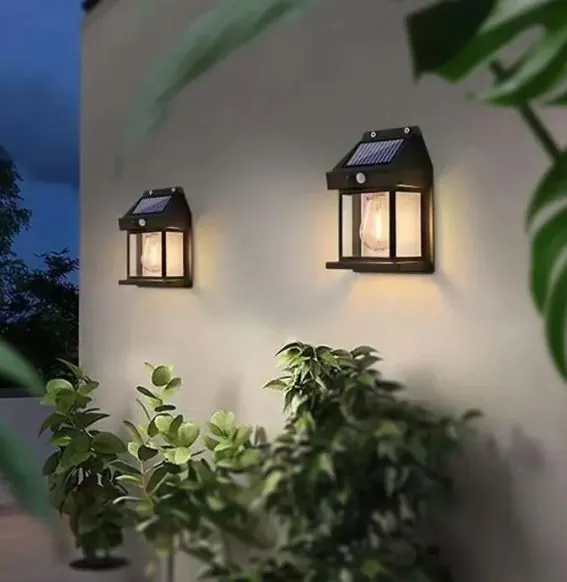
A solar wall light with a motion sensor can deliver useful brightness without spending that energy all night. The key is mode logic: what the light does before motion, how bright it becomes, how long it stays boosted and when it returns to standby. Compare that sequence before comparing the maximum lumen number.
Why motion sensing suits solar power
High output consumes stored energy quickly. A PIR sensor lets the product remain off or dim until a person enters the detection area. This makes motion wall lights practical for gates, entrances, sheds and side paths where occasional visibility matters more than continuous illumination.
Common operating modes
One mode may stay off and switch to high output on motion. Another may remain dim and boost when triggered. A third may provide steady low output without motion response. Mode names vary, so the manual should describe behavior in plain language. Buyers should confirm which mode supports each runtime claim.
Detection range is not one simple number
PIR performance changes with mounting height, approach direction, ambient temperature and nearby obstructions. Crossing the detection zone often produces a stronger signal than walking straight toward the sensor. A laboratory maximum does not guarantee identical behavior at every doorway. Adjustable sensitivity or timing can help, but also requires clearer instructions.
Choose the mounting position carefully
The sensor needs a view of the approach area while the solar panel needs daylight. Avoid placing the fixture under deep eaves or behind foliage. Keep it away from moving branches, heat sources and busy roads that may cause unwanted triggers. Follow the specified mounting height instead of treating the product as a portable lamp.
Panel and battery still define performance
Motion logic cannot create energy. Frequent triggering at a busy entrance may use more power than the design assumed. Compare panel output, battery capacity, maximum lumens, boost duration and the stated number or pattern of activations. A product for a rarely used gate and one for a hotel walkway may need different configurations.
Light distribution matters at a wall
A carriage lantern provides a decorative all-around effect; a modern downlight directs output toward the ground; a wide security head covers a larger area. Select the optic by the task and control glare into windows. Color temperature should support the building and nearby landscape lighting.
Weather and user controls
Check the complete IP rating, switch location, sensor window, battery access and mounting plate. Controls should be reachable without removing seals repeatedly. Rain running down a wall can collect around poor cable or screw details, so correct orientation and a flat mounting surface matter.
Reduce false triggers before blaming the sensor
Moving foliage, pets, traffic and heat changes can cause activations that drain the battery. Observe the detection zone after installation and narrow or redirect the fixture where the design allows. Do not cover the sensor with a material unless the manufacturer supports that adjustment, because improvised masking can trap moisture or create unreliable behavior.
Decide what happens after the trigger
A short boost is efficient for a gate, while an entrance used for keys or deliveries may need a longer interval. Repeated triggers can keep some lights at high output continuously. Specify the hold time and return behavior so a buyer can judge both convenience and energy use.
Commission the light at night
After mounting, walk across and toward the sensor from realistic approaches. Check the detection point, glare, beam coverage and return to standby. Repeat after the panel has charged in its actual position. A daytime hand-wave test does not show whether the product illuminates the intended ground area or receives enough solar energy.
Wholesale comparison checklist
- PIR technology, detection angle and stated range
- Recommended mounting height and approach direction
- Standby, motion and steady-light modes
- Maximum and standby lumens
- Trigger duration and expected activation pattern
- Panel, battery, runtime and charging conditions
- IP rating, bracket, screws and installation guide
Bottom line
The best solar motion wall light is not simply the brightest. Its mode, sensor view, panel exposure and energy storage fit the location. Review the Carriage Solar Wall Lantern with Motion Sensor or compare the full wall and fence light collection.
Related solar lighting guides
Ready to source solar garden lights?
Send us your target assortment, quantities or OEM brief—our export team will reply with relevant models, specifications and quotation details.
Request a Wholesale Quote Browse Products