How Many Lumens Do You Need for Outdoor Pathway Lighting?
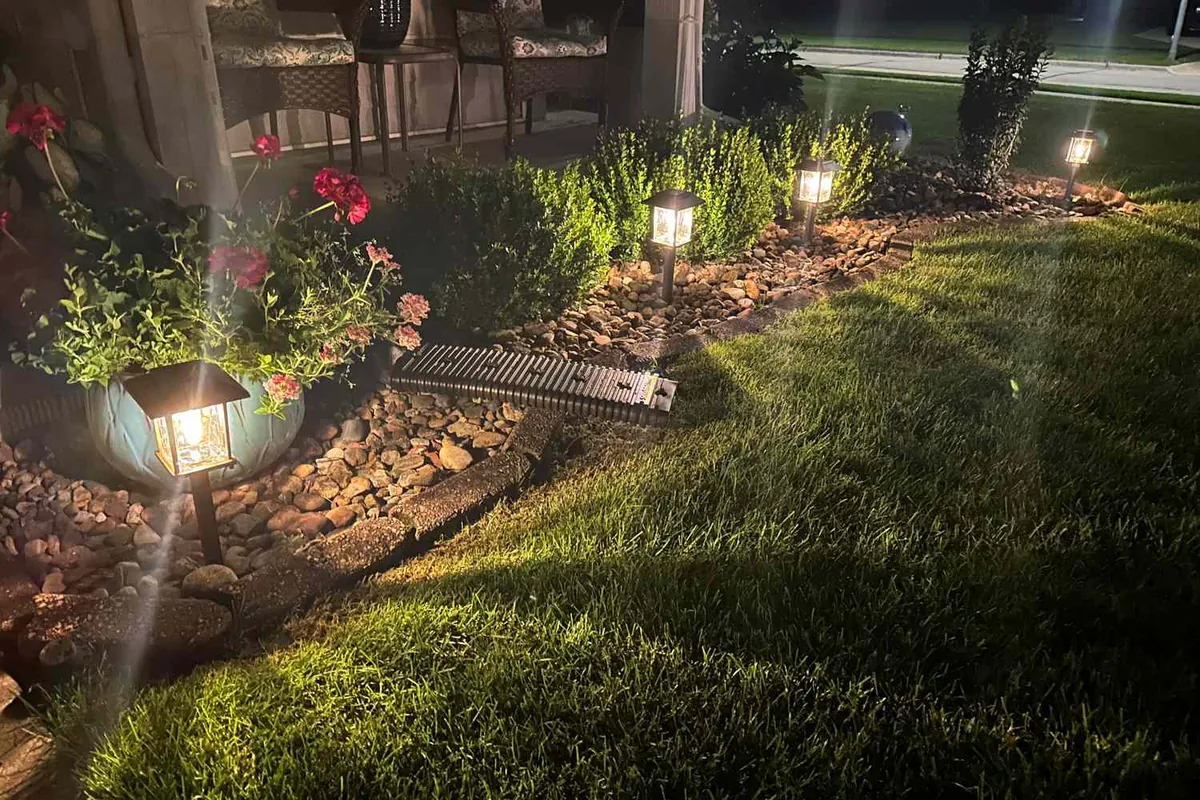
If you have ever compared two solar pathway lights - one claiming 15 lumens, another claiming 200 - you have already discovered the problem: lumen numbers in this category are inconsistent, sometimes inflated, and almost never explained. Yet lumens drive everything your customers care about: how the path looks, how safe it feels, and whether the light is still on at 4 a.m.
This guide breaks down realistic lumen targets by application, explains the trade-off between brightness and runtime, and gives wholesale buyers a framework for speccing pathway assortments that match real use cases instead of marketing numbers.
What Lumens Actually Mean on a Garden Path
A lumen measures total light output, but what a person perceives on a pathway depends on beam spread, mounting height and spacing. A 15-lumen stake light with a fluted lens throws a decorative pattern across roughly one square meter - enough to mark an edge beautifully. A 200-lumen uplight at the same spot would look like a runway light and ruin the ambiance.
That is why the first question is never "how many lumens?" but "what is the light for?"
Lumen Targets by Application
Decorative accent and border marking: 5-20 lm
Classic stake lights, pebble lights and low lantern stakes live here. The job is to outline a path, not illuminate it. At 1.5-2 m spacing, 10-15 lm per unit creates the warm, layered look that dominates residential retail photography. This is also the volume segment: most best-selling solar pathway lights on the market sit in this band.
Functional walkway lighting: 20-50 lm
Where the path is a real route - front walks, community paths, steps - spec 25-50 lm with a downward-facing optic. Lantern-style path lights in the 25 lm range are the sweet spot, and motion-boost wall lanterns (30 lm ambient, 120 lm on trigger) cover entry zones without running bright all night.
Driveway and perimeter guidance: 50-100 lm
Driveway markers and perimeter posts need enough punch to be seen from a moving vehicle. Post-cap and bollard formats at 50-100 lm, spaced 3-4 m, do this well. This is the band where buyers searching "solar driveway lights" land - a useful sub-assortment in any pathway collection.
Spotlighting and security: 200-300 lm
Adjustable solar spotlights for flags, signage and trees operate at 200-300 real lumens. Anything claiming 500+ lm from a single small integrated panel should be treated with skepticism: the physics of a 2-watt panel and a 2200 mAh cell does not support it through a full night.
The Trade-Off Buyers Must Understand: Brightness vs. Runtime
Every solar light is an energy budget. A 2200 mAh lithium cell stores roughly 8 Wh. Run 300 lm (about 3 W of LED power) and you get under three hours. Run 30 lm and the same cell lasts three nights. Manufacturers balance this three ways:
- Mode logic: motion sensors or dim-then-boost programs deliver high lumens only when needed.
- Panel size: a 5.5V/3W panel recharges meaningfully faster than a 2V/120mA panel - critical in winter or cloudy climates.
- Battery honesty: real capacity, not label capacity. This is where cheap imports quietly fail; it is also the first thing we test when benchmarking competitor samples.
For your assortment, the practical rule: decorative SKUs compete on design and runtime; functional SKUs compete on honest lumens. Never let a supplier quote lumens without stating panel wattage and battery capacity in the same breath.
Spacing Math for Real Projects
A quick field formula for pathway layouts: space stake lights at 6-8 times their mounting height for continuous guidance. At 40 cm height, that means 2.5-3 m spacing for functional lighting, or tighter (1.5-2 m) for decorative layering. For driveways, alternate sides at 3-4 m so drivers read the edge as a line rather than dots.
Spec Checklist for Wholesale Buyers
- Ask for lumens and panel wattage and battery capacity together - the trio defines real performance.
- Match lumen bands to your channel: 10-20 lm for garden retail, 25-50 lm for hardware/DIY, 200-300 lm for the spotlight segment.
- Request runtime at a stated mode, not a range ("8-10 h at full brightness" beats "up to 12 h").
- Order samples and test them through three consecutive cloudy days - that is your customer's worst case.
Bottom Line
Most residential pathways need 10-50 lumens per fixture, not 500. The winners in this category are not the brightest lights; they are the lights that are still glowing at dawn. Spec to the application, demand the panel-battery-lumen trio on every quote, and your pathway assortment will earn reviews instead of returns.
Sourcing pathway lights for your market? Browse our solar pathway lights collection or ask our team for a specced assortment.
Keep reading
Ready to light up your market?
Send us your target assortment, quantities or sketches - our export team replies with pricing, specs and samples within 12 hours.
Get a Free Quote Chat on WhatsApp